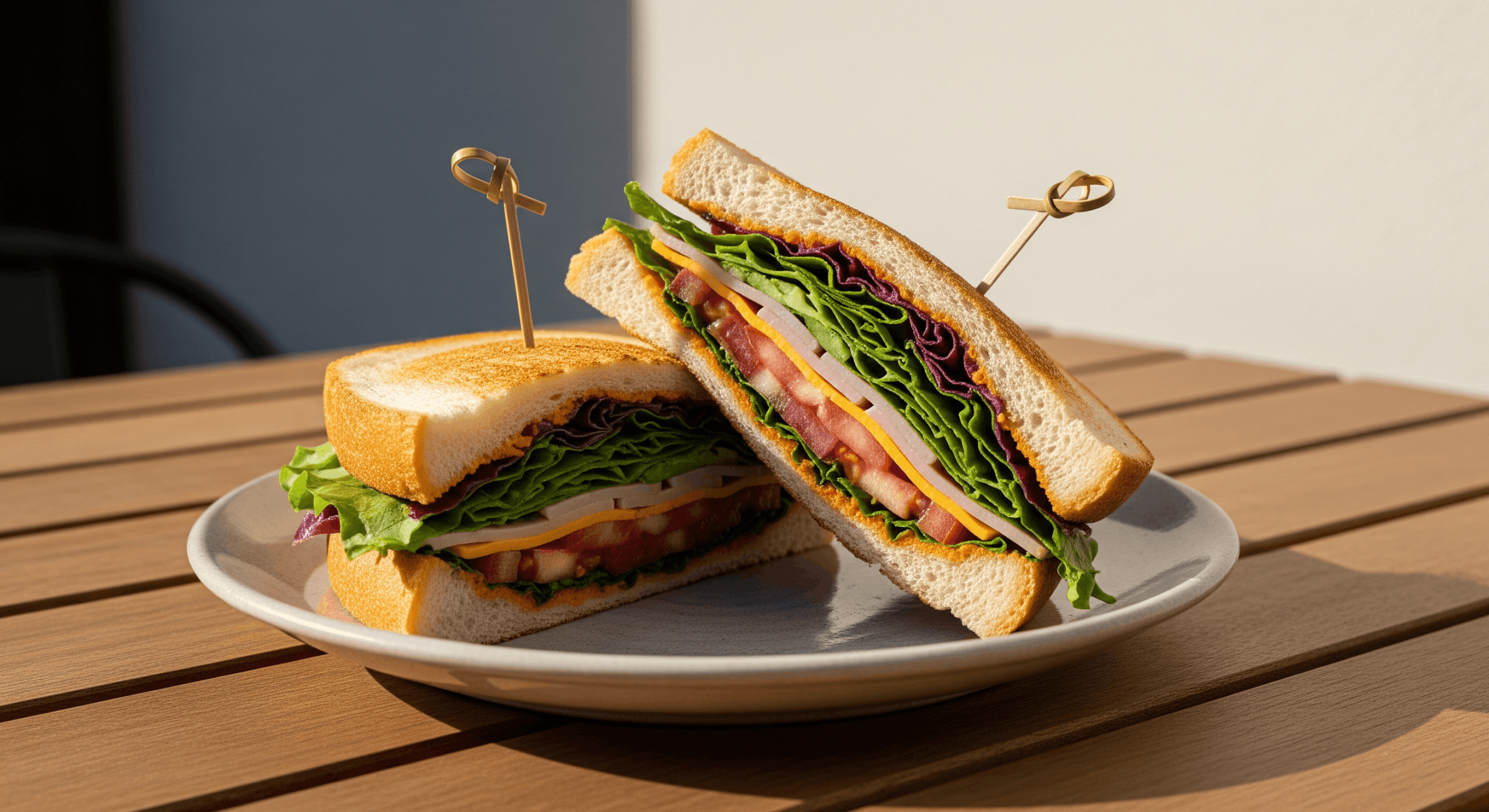
You can tell almost immediately.
One bite in, and you know whether you’re eating something crafted with care—or something assembled on autopilot. That difference comes down to what makes a sandwich feel homemade instead of mass produced.
It’s not just about ingredients. It’s about texture, balance, preparation, and intention. When a sandwich feels homemade, it feels personal. When it feels mass produced, it feels forgettable.
Let’s break down what actually creates that difference.
Jump to:
TLDR – Quick Guide
- Fresh, properly textured bread makes the biggest difference.
- Balanced layering prevents sogginess and uneven bites.
- Visible, whole ingredients signal freshness.
- Thoughtful seasoning elevates flavor.
- Preparation style reflects care and attention.
Fresh Bread With Character
The first answer to what makes a sandwich feel homemade is bread.
Homemade-feeling sandwiches typically feature bread that is:
- Soft but structured
- Freshly baked or properly stored
- Slightly crisp on the outside (if toasted)
- Not overly uniform or compressed
Mass-produced sandwiches often use bread that feels overly processed—perfectly shaped, overly airy, or pre-sliced to uniform thinness.
Bread sets the foundation. If it tastes fresh and has real texture, the sandwich immediately feels more personal.
Ingredient Texture and Visibility
Another major factor in what makes a sandwich feel homemade is ingredient visibility.
Homemade-style sandwiches often include:
- Thick-sliced tomatoes
- Crisp lettuce with texture
- Clearly seasoned proteins
- Sauces applied intentionally—not poured
You can see and taste the components. Nothing feels overly blended or mechanically layered.
Mass-produced sandwiches, by contrast, often feel overly uniform. Ingredients are thin, flat, and standardized to maximize efficiency rather than flavor.
Balanced Layering and Structure
A sandwich that feels homemade is built thoughtfully.
That means:
- Moist ingredients aren’t placed directly against bread without protection
- Sauces are spread evenly
- Ingredients are distributed to avoid empty bites
- The sandwich holds together naturally
Structure matters. When every bite tastes balanced, it reflects care.
If you browse a well-curated breakfast and lunch menu, you’ll often notice that thoughtfully described sandwiches emphasize specific layers and preparation style.
That’s rarely accidental.
Freshly Prepared Proteins
Protein preparation is one of the strongest indicators of what makes a sandwich feel homemade.
Freshly prepared proteins:
- Have visible seasoning
- Maintain moisture
- Offer texture variation
- Taste distinct—not overly processed
Mass-produced proteins often taste pre-cooked and reheated. They can feel rubbery, overly uniform, or heavily preserved.
When protein tastes freshly prepared, the entire sandwich feels elevated.
At places like Corie’s Cafe in Duvall, the difference often shows in how proteins are described and plated—less assembly-line, more intentional preparation.
Attention to Seasoning
Seasoning is subtle but powerful.
Homemade-feeling sandwiches often include:
- A pinch of salt and pepper on tomatoes
- Light seasoning on greens
- Balanced sauce ratios
- A thoughtful spread or aioli
Mass-produced sandwiches tend to rely solely on one dominant sauce for flavor.
Layered seasoning signals attention.
Temperature and Fresh Assembly
Another overlooked factor in what makes a sandwich feel homemade is temperature.
Freshly assembled sandwiches:
- Maintain crisp textures
- Avoid sogginess
- Deliver warm proteins and cool vegetables distinctly
- Taste vibrant rather than stale
Mass-produced sandwiches often sit wrapped for extended periods, allowing moisture to soften bread and flatten texture.
Fresh assembly changes everything.
Portioning That Feels Human
Homemade sandwiches rarely look identical.
They may have:
- Slight variation in shape
- Generous layering
- Visible hand-assembled structure
That imperfection feels authentic.
Mass production aims for uniformity. Homemade preparation embraces individuality.
Why This Difference Matters
Understanding what makes a sandwich feel homemade isn’t just about preference—it’s about experience.
Homemade-feeling sandwiches:
- Taste fresher
- Feel more satisfying
- Offer better texture
- Reflect intention and care
When a sandwich feels crafted rather than assembled, it leaves a stronger impression.
Signs a Sandwich May Be Mass Produced
While not always definitive, common indicators include:
- Uniform, overly thin ingredients
- Excessive reliance on one sauce
- Soggy bread
- Flat, compressed texture
- Perfectly identical appearance every time
These traits often suggest efficiency-driven preparation.
Key Takeaways
- What makes a sandwich feel homemade starts with fresh, textured bread.
- Visible, whole ingredients create authenticity.
- Balanced layering prevents sogginess and uneven bites.
- Freshly prepared proteins elevate flavor.
- Subtle seasoning and careful assembly reflect intention.
FAQs
What makes a sandwich feel homemade compared to store-bought?
Fresh bread and balanced layering make a noticeable difference. Homemade-style sandwiches typically use thicker, more visible ingredients. The preparation feels intentional rather than standardized.
Does bread quality really affect what makes a sandwich feel homemade?
Yes, bread plays a major role. Fresh bread with texture creates structure and flavor. Overly processed bread can make even good fillings feel mass produced.
Are homemade sandwiches always larger?
Not necessarily. Size doesn’t determine quality. It’s the freshness, layering, and ingredient care that make the difference.
How can I tell if a café makes sandwiches fresh?
Look for visible ingredient texture and clear menu descriptions. Fresh assembly usually prevents sogginess and maintains distinct flavors. Staff confidence about preparation is also a positive sign.
Why do mass-produced sandwiches taste different?
Mass-produced sandwiches prioritize uniformity and shelf life. This can affect texture, seasoning, and moisture balance. Homemade-style sandwiches typically focus more on flavor and freshness.