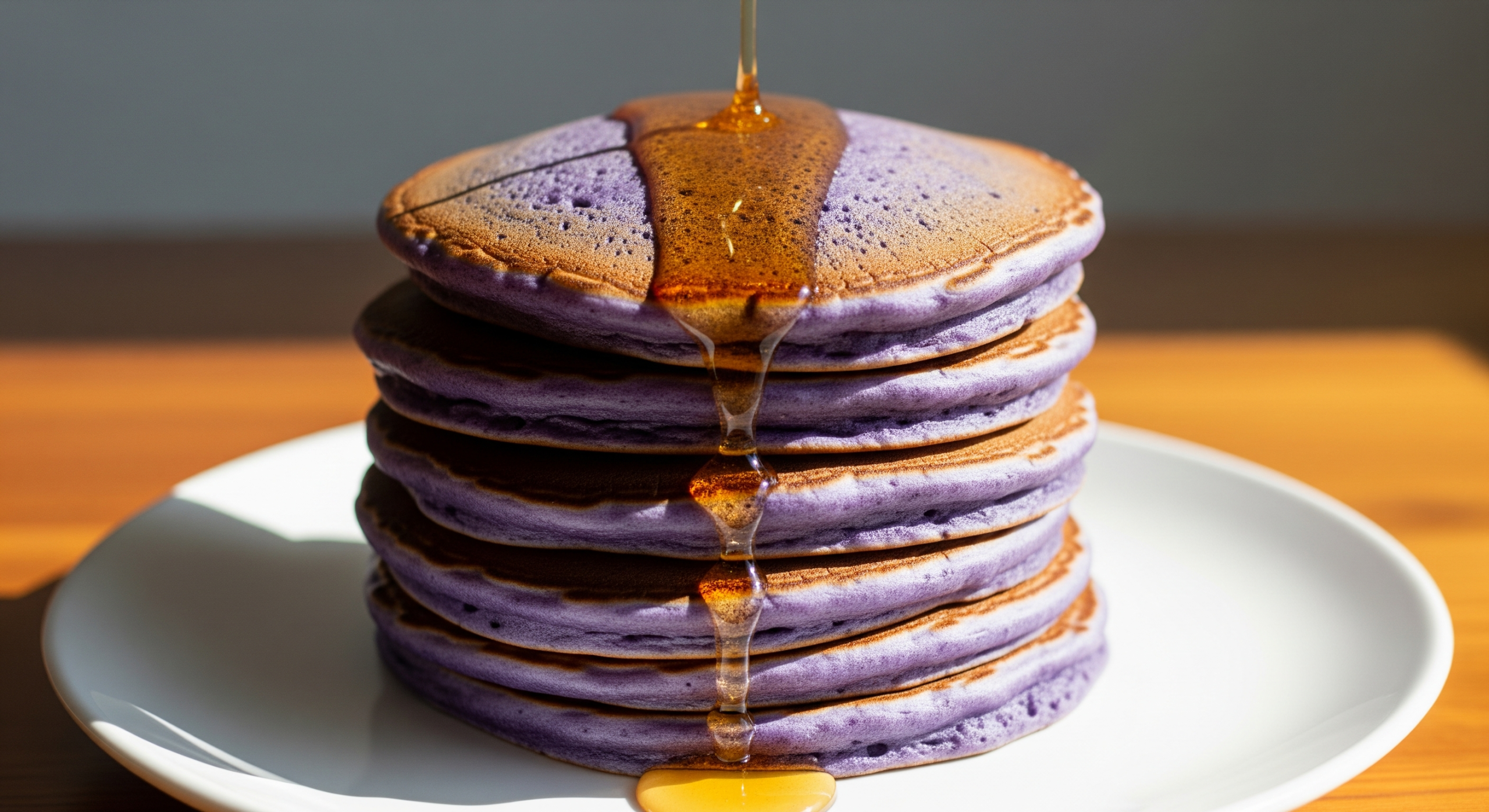
Ube pancakes aren’t just a trend—they’re a discovery. As more people search for ube pancakes, they’re finding a brunch option that’s visually striking, subtly sweet, and surprisingly comforting. With their natural purple color and rich, vanilla-like flavor, ube pancakes stand out without relying on gimmicks.
What started as a cultural staple in Filipino cuisine has officially crossed into mainstream brunch culture. And once people try them, traditional pancakes suddenly feel… predictable.
Jump to:
TLDR – Quick Guide
- Ube pancakes are naturally purple and lightly sweet
- Made from purple yam, not artificial coloring
- Flavor is smooth, nutty, and vanilla-like
- Popular at brunch spots embracing global flavors
- Ube pancakes offer a unique twist without being overpowering
What Is Ube and Why Is It So Popular?
Ube (pronounced oo-beh) is a purple yam traditionally used in Filipino desserts. Unlike taro or sweet potato, ube has a naturally vibrant purple color and a flavor profile that’s mild, creamy, and slightly nutty.
According to Bon Appétit, ube’s rise in popularity is driven by two things:
- Its natural color, which doesn’t require dyes
- Its balanced sweetness, which pairs perfectly with breakfast foods
When folded into pancake batter, ube adds flavor and color without overwhelming the dish. That’s why ube pancakes appeal to both adventurous eaters and people who normally stick to classics.
Why Ube Pancakes Taste Different (in a Good Way)
Ube pancakes don’t taste like artificial flavoring or sugary novelty food. Instead, they offer a subtle depth that enhances the pancake itself.
What sets ube pancakes apart:
- A gentle sweetness that doesn’t overpower syrup
- A creamy, almost custard-like undertone
- A richer mouthfeel than standard pancakes
Unlike flavored pancakes that rely on extracts, ube is incorporated directly into the batter. This means the flavor is consistent, natural, and integrated—every bite tastes intentional.
The Visual Appeal Matters More Than You Think
Let’s be honest: people eat with their eyes first.
Ube pancakes instantly stand out:
- Naturally purple without food coloring
- Visually striking but still elegant
- Instagram-worthy without sacrificing flavor
Food trend analysts from Eater note that visually distinctive dishes are more likely to be ordered repeatedly, not just photographed. Ube pancakes succeed because they look exciting and deliver on taste.
That balance is rare—and powerful.
Why Brunch Menus Are Embracing Ube Pancakes
Brunch culture thrives on comfort with a twist. Ube pancakes fit perfectly into that sweet spot.
They offer:
- Familiar format (pancakes)
- Global influence (Filipino cuisine)
- Modern presentation
- Broad appeal across age groups
At local cafés that prioritize fresh, creative cooking—like Corie’s Cafe—ube pancakes add variety without alienating traditional breakfast lovers. They’re approachable, not intimidating.
Ube Pancakes vs. Regular Pancakes
While classic pancakes will always have a place, ube pancakes bring something extra to the table.
Regular Pancakes
- Neutral flavor
- Reliant on toppings for excitement
- Familiar but predictable
Ube Pancakes
- Naturally flavorful
- Visually distinctive
- Enjoyable even before syrup
The difference isn’t about replacing classics—it’s about expanding options.
How Ube Pancakes Are Made (and Why Fresh Matters)
Quality ube pancakes depend on freshness. The best versions use real ube halaya or high-quality ube puree, folded gently into batter to preserve both color and texture.
Key factors:
- Fresh batter mixed daily
- Proper balance of ube to avoid heaviness
- Gentle cooking to maintain fluffiness
When ube pancakes are made fresh, they’re light, airy, and evenly colored. Pre-made or frozen versions lose vibrancy and texture quickly—another reason local brunch spots do them best.
Key Takeaways
- Ube pancakes combine comfort food with global flavor
- Their natural purple color sets them apart visually
- Flavor is subtle, creamy, and brunch-friendly
- Fresh preparation makes all the difference
- They’re not a trend—they’re a new staple
FAQs
What do ube pancakes taste like?
Ube pancakes have a mild sweetness with hints of vanilla and nuttiness. The flavor is smooth and balanced, not overpowering. They’re comforting rather than sugary.
Are ube pancakes naturally purple?
Yes, real ube is naturally purple. Authentic ube pancakes don’t rely on artificial dyes. The color comes directly from the purple yam.
Are ube pancakes very sweet?
No, they’re subtly sweet. Most of the sweetness comes from the ube itself, not added sugar. This makes them ideal for brunch rather than dessert-heavy breakfasts.
Are ube pancakes a dessert or breakfast?
They’re both—but most people enjoy them for brunch. The flavor is rich yet light enough for morning meals. They pair well with coffee and simple toppings.
Why are ube pancakes becoming so popular?
People are seeking new flavors that still feel familiar. Ube pancakes deliver something different without being intimidating. That combination makes them highly repeatable.